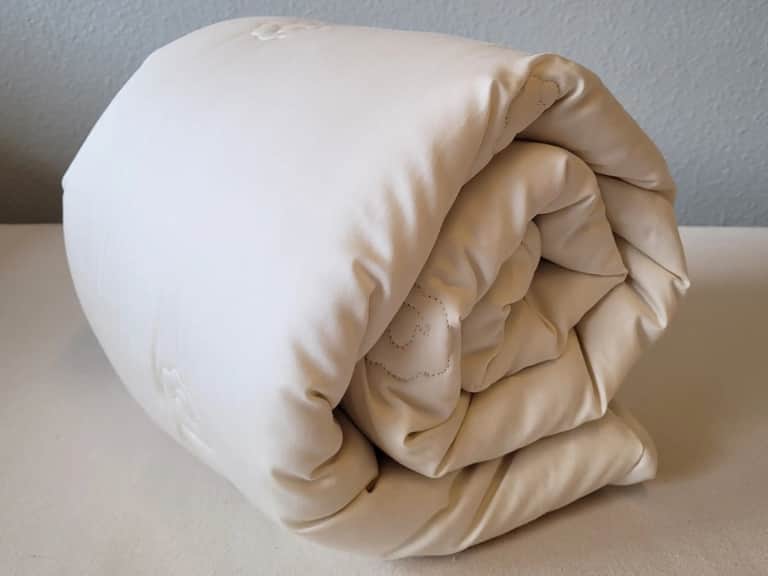
Bedding Guide · Seasonal Comfort
Half-and-Half Seasonal Silk Bedding: A Guide to Layering Warmth
A bedroom changes with the weather, even when the bed does not. Pairing silk bedding in different warmth weights can offer a flexible answer: a lighter layer for warm nights, a heavier one when temperatures fall, and a way to adjust the bed between seasons without replacing everything at once.
Silk has a distinctive place among bedding fibers. It can feel smooth and light against the skin, and a silk-filled comforter often drapes differently from a lofty down or wool insert. That does not make it automatically cool in summer or warm enough for every winter night. The feel of a bed depends on the fill, shell, construction, room temperature, sleepwear, and the sleeper’s own preferences. A half-and-half arrangement is best understood as a system to test and adjust—not a guaranteed formula.
What does “half-and-half” mean?
In this guide, half-and-half means combining two silk bedding pieces of different warmth weights—for example, a summer-weight comforter with a winter-weight one. The idea is to add or remove insulation as conditions change. Depending on the construction, the pieces might be used separately, layered loosely, or fastened together if their design supports it.
The arrangement is not necessarily a literal division of the bed into two materials or two sides. It describes a flexible approach to warmth: one layer provides a lighter baseline, while a second offers additional insulation when needed. In a shared bed, the phrase can also describe using different layers on each side to accommodate different temperature preferences. That approach requires careful attention to fit and movement, so the layers do not bunch or pull apart during the night.
Silk bedding varies considerably. A product described as summer-weight may have a different fill amount, construction, or warmth rating from another maker’s version. Names alone are not a reliable measure. Before planning a pairing, look for the fill type, stated weight or tog rating if provided, finished dimensions, shell fabric, care instructions, and any fastening details.
Why layer instead of choosing one fixed warmth level?
Indoor temperatures are rarely constant throughout the year. A well-heated bedroom in winter can feel warmer than a poorly insulated room on a mild autumn night. A sleeper who runs warm may need less insulation than someone sharing the same room. Even within one night, bedding can feel different as the body settles, the room cools, or a window is opened.
Separate seasonal silk layers make it possible to respond to those changes gradually. A lighter comforter can remain in use through warmer months, while a heavier piece can be introduced as the bedroom cools. During transitional weather, the two may be combined if the design and care guidance make that suitable. This can be more adaptable than relying on one thick comforter throughout the year, particularly when a person’s comfort needs shift with the season.
There are limits. Adding layers also adds material, and the combined bed may feel heavier, warmer, or less fluid than either piece alone. If one layer compresses the other, it may not feel as lofty or drape as intended. If the pieces slide independently, they can gather at the foot or leave gaps. The right setup is therefore the one that stays comfortable and orderly in the actual bedroom, not the one that sounds most versatile on paper.
>Start with the room and the sleeper
Before combining summer- and winter-weight silk, consider the conditions the bedding needs to handle. A simple record over several nights can be more useful than guessing. Note the bedroom temperature, whether the sleeper wakes feeling too warm or too cool, and whether the discomfort is consistent or seasonal. A thermometer can clarify whether a room is changing substantially overnight, but personal comfort remains the deciding measure.
- Room conditions: Consider heating, air conditioning, drafts, insulation, and how much the temperature falls overnight.
- Personal preference: Notice whether the sleeper likes a light covering, a close drape, or a more substantial cocoon of warmth.
- Other bedding: Sheets, blankets, sleepwear, and mattress protectors all contribute to how warm the bed feels.
- Shared-bed needs: If two people prefer different warmth levels, separate top layers may be easier to manage than one shared stack.
- Routine: Decide whether the household is comfortable changing layers seasonally and storing unused bedding cleanly.
Make adjustments one at a time. If the bed feels too warm, remove a layer before changing several other parts of the bedding. If it feels too cool, add the lighter piece or adjust the cover and sheet combination. A few nights of observation can reveal whether the issue is the room, the total insulation, or the way the layers sit on the bed.
Choose compatible pieces before layering
Two comforters can be made from silk and still behave very differently. One may contain long-strand silk batting held in place by quilting; another may use a different fill structure or a distinct shell. Their finished sizes, corner details, and flexibility may not match. Compatibility is as much about construction as it is about fiber.
Compare finished dimensions
Check the actual width and length of both pieces, not only the labels such as twin, queen, or king. Standard size names are not perfectly uniform across manufacturers. If the dimensions differ, the edges may hang unevenly or one comforter may shift more readily over the other. Consider the mattress width, mattress depth, bed frame, and how much overhang is desired. A well-sized layer should cover the sleeping surface without dragging excessively or leaving exposed areas.
Inspect fastening details
Some silk comforters have ties or buttons intended to connect compatible pieces. Others have corner loops designed to attach to a duvet cover, not to another insert. Those functions are not interchangeable. Read the instructions to determine what each fastening is meant to secure. Do not assume that two pieces can be buttoned together simply because both have small ties or loops.
If the pieces are designed to connect, check whether the spacing and placement of the fasteners match. Unevenly placed ties may twist the layers or create tension at the edges. Fastenings should feel secure without pulling the shell out of shape. When there is no intended connection, a duvet cover with compatible interior ties may help keep one insert stable inside the cover, though it will not necessarily stop a second loose layer from shifting on top.
Consider the combined feel
Silk is often valued for its smooth hand and flowing drape, but the sensation of two layers will depend on their shells and fill. A thicker pairing may feel more substantial than expected. Check whether the fabrics glide against each other or grip, whether quilt lines align, and whether the layers can be shaken out and repositioned easily. A setup that requires frequent wrestling may be less practical than a single comforter with an appropriate warmth level.
A practical way to arrange seasonal layers
When both pieces are designed to be used together, follow the maker’s directions for their order and fastening. If the manufacturer does not describe a combined arrangement, use caution: do not sew, pin, or alter delicate shells as a shortcut. The safest arrangement may be to use the pieces separately as the weather changes rather than fastening them in a way they were not designed to support.
- Prepare the bed. Start with a flat, properly fitted sheet and check that the mattress and duvet cover are the correct size.
- Place the lighter piece first. If using a cover, secure the comforter to its interior ties where provided, then smooth the fill from the center toward the edges.
- Add the heavier layer only when needed. Center it over the bed and allow similar coverage on both sides. Avoid stretching the edges to force a fit.
- Secure only as instructed. Use compatible buttons or ties according to the care or setup guidance. Keep fasteners free of knots and excessive tension.
- Test the arrangement. Lie under the bedding and turn from side to side. Notice whether the layers move together, bunch, or feel restrictive.
- Reassess after the night. If the layers have migrated or the bed felt too warm, return to one layer or change the arrangement rather than adding more fasteners.
For a shared bed, two independent covers or separate top layers can make individual adjustment easier. The trade-off is a more divided appearance and the possibility that the layers separate at the center. Tucking them tightly may reduce movement but can also limit the free drape that makes bedding comfortable. A loose, even arrangement is often preferable to a rigid one.
Understanding warmth labels and silk fill
“Summer-weight” and “winter-weight” are useful starting points, not universal standards. A summer-weight silk comforter is generally intended to provide less insulation than a winter-weight version in the same range, but the exact difference depends on its fill amount and design. If a manufacturer provides a tog value, fill weight, or other measurable specification, use it to compare pieces from that maker. Do not assume that a label from one brand corresponds precisely to a label from another.
Fill weight can help explain how much material is inside a comforter, but it does not tell the whole story. Shell fabric, quilting, the distribution of the fill, and the dimensions of the comforter all influence the finished feel. A loosely quilted piece may drape differently from one divided into small sections. An insert used inside a cover may also feel different from the same comforter used alone.
Silk is not a substitute for managing the whole sleep environment. If a room is persistently uncomfortable, consider ventilation, heating or cooling, and the other textiles on the bed. A change in comforter weight may help, but it cannot correct every cause of a warm or cold night.
Care: treat each layer as its own textile
Care requirements can differ even when two items are both described as silk bedding. The shell and fill may have separate limitations, and construction can affect whether washing is suitable. Some pieces may call for spot cleaning or professional laundering; others may allow a particular gentle wash method. The care label and manufacturer’s instructions take priority over general advice.
Before combining layers, review the care information for both. If one comforter requires professional cleaning and the other is washable at home, plan for those different routines. Never assume that a duvet cover makes the insert washable, or that a removable cover means the silk-filled piece can be laundered with it.
- Use a cover when appropriate. A removable duvet cover can help limit everyday soil and reduce the frequency with which an insert needs cleaning.
- Address small marks promptly. Follow the maker’s spot-cleaning directions and avoid rubbing or soaking delicate fabric unless the instructions permit it.
- Dry thoroughly when cleaning is allowed. Damp fill can take time to dry. Follow the stated method and make sure the piece is fully dry before covering or storing it.
- Air and store carefully. Keep bedding dry and clean before storage. Use a breathable storage bag or container where possible, and avoid compressing delicate fill for long periods.
- Inspect fastenings and seams. Look for loose ties, damaged loops, or openings before each seasonal change.
Cleaning two layers at once may be inconvenient, especially if they have different care instructions. A duvet cover is useful for protecting the surface, but it cannot eliminate the need to follow the care guidance for each insert. Keeping labels or a written note with seasonal bedding can make the routine easier to remember months later.
Common problems and simple adjustments
The layers slide apart
First check whether the pieces were designed to attach to each other or only to a cover. If compatible fasteners exist, align them without pulling. If not, a well-fitted duvet cover may stabilize the insert it contains, but a second layer placed over it may still move. Try using the lighter piece alone, or reserve the second layer for especially cold nights rather than forcing a permanent connection.
The bed feels too warm
Remove one layer and reassess before changing the rest of the bedding. A warmer room, heavier sleepwear, or a dense cover can contribute to the sensation. A lighter comforter may be enough, even if the calendar suggests winter. Comfort is shaped by actual conditions, not season names.
The edges do not line up
Recheck the finished dimensions and center each piece from the head of the bed. If one item is much smaller, layering may leave part of the bed uncovered. An uneven edge is not necessarily unsafe, but it can make the arrangement uncomfortable and difficult to maintain. Choosing pieces with compatible dimensions is more effective than trying to stretch or tightly tuck them into alignment.
The combined bedding feels heavy or stiff
Two layers can change the sensation of a bed even when each is light on its own. Test them separately and together. If the doubled arrangement limits movement or feels cumbersome, use one comforter at a time and switch as temperatures change. Flexibility does not require wearing both layers simultaneously.
A seasonal routine that stays manageable
A half-and-half system works best when its upkeep is simple. At the start of a seasonal change, inspect each comforter, read its care instructions, and check its fastenings. Air it according to the maker’s guidance, then make the bed with the lighter piece first. Keep the heavier layer accessible but protected until the room calls for it.
When the colder period passes, clean each piece as directed and allow it to dry completely before storage. Avoid placing heavy objects on stored comforters or sealing them away while damp. At the next change of season, check for shifted fill, damaged seams, or missing ties before bringing the bedding back into regular use.
Seasonal storage is also a chance to reassess what worked. If the heavier layer was rarely needed, the lighter comforter may suit the room most of the year. If the bed repeatedly felt cold despite layering, room conditions or the chosen warmth levels may deserve a closer look. A short note on what was comfortable can make future adjustments more deliberate.
A quick checklist before you pair silk layers
- Do both pieces have clearly stated care instructions?
- Are their finished dimensions compatible with the bed and with each other?
- Are buttons, ties, or loops intended to connect the pieces, or only to secure a duvet cover?
- Does the combined arrangement remain comfortable when you move beneath it?
- Can you remove a layer easily when the room warms up?
- Do you have a clean, dry place to store the unused piece?
- Have you considered sheets, covers, sleepwear, and room temperature as part of the total setup?
If any answer is uncertain, use the comforters separately until you have confirmed the details. Product labels, manufacturer instructions, and actual dimensions are more dependable than assumptions based on a warmth name or a familiar size label.
The value of a flexible bed
Layering summer- and winter-weight silk bedding offers a way to adapt warmth over the year, but the best arrangement is not always the most elaborate one. A lighter comforter may be enough for much of the calendar; a heavier piece can be brought in when the room cools. Where the designs permit, combining them can bridge the uncertain weeks between seasons.
Fit, fastening, and care determine whether that flexibility feels effortless or frustrating. Match dimensions where possible, use only the connections intended by the maker, and treat each piece according to its own care requirements. Then let the bedroom—not a label or a fixed rule—guide the final adjustment. The result should be a bed that can change with the weather while remaining simple to use, comfortable to sleep in, and easy to care for.